Commercial Waste Kentish Town: Recycling and Sustainability
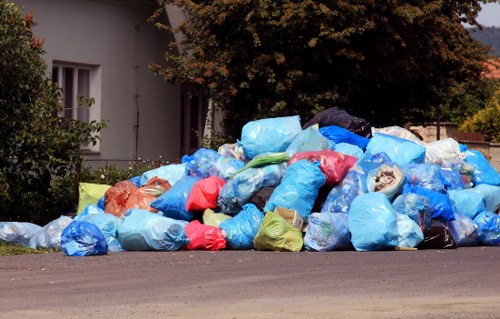 Commercial Waste Kentish Town operates with a clear commitment to creating an eco-friendly waste disposal area and a resilient sustainable rubbish area for local businesses. This page outlines how Kentish Town commercial waste services support circular economy principles, reduce carbon emissions and increase reuse and recycling rates across the borough. We work alongside local councils, social enterprises and trade partners to make business waste management both practical and green.
Our approach to commercial waste in Kentish Town is based on measurable targets and continuous improvement. The programme sets a recycling percentage target of 65% by 2030 for commercial waste streams, achieved by improved segregation, reuse schemes and partnership collections. That target covers mixed dry recycling, food and organic streams, textiles, metal, glass and controlled reuse of bulky items.
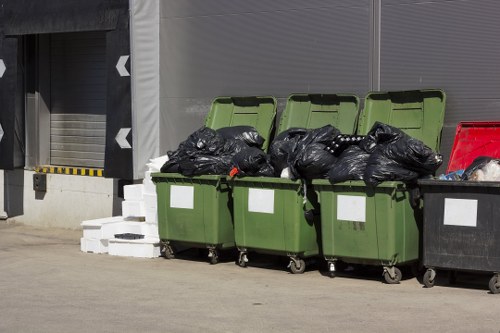 To reach that recycling rate we mirror the boroughs' approach to waste separation: clear containers for paper and cardboard, bottle and glass banks, separate food waste collections where available, and designated areas for e-waste and batteries. Key activities include:
- Dedicated dry recycling collections for shops and offices
- On-site food waste and organic diversion where possible
- Secure containers for confidential paper recycling
We prioritise routing waste through authorised local transfer stations and material recovery facilities. Local transfer stations in the Camden area and neighbouring boroughs provide an essential hub for consolidating loads, diverting recyclables from landfill and ensuring compliant treatment. Using nearby transfer facilities reduces vehicle miles and helps maintain the low-impact profile of our Kentish Town commercial waste chains.
Partnerships with charities and reuse organisations are central to creating a true sustainable rubbish area. We coordinate collections that redirect usable office furniture, small electricals and textiles to local reuse charities and social enterprises. These partnerships extend the life of goods, support community programmes and reduce raw material demand. Typical partners include furniture reuse schemes, electronic refurbishers and local clothing charities that accept commercial donations.
 Beyond reuse we support donation and redistribution networks for unsold retail items and surplus food. By connecting business waste streams with food banks, redistribution platforms and community projects we reduce waste and deliver social value while complying with health and safety regulations and waste duty of care requirements.
Low-Carbon Fleet and Emission Reductions
Our fleet is designed to be part of the low-carbon solution. We operate low-carbon vans, including electric and plug-in hybrid vehicles, and specify Euro 6 engines for residual combustion fleet where electric is not yet viable. Route optimisation software reduces mileage, idling and fuel consumption — cutting emissions and local air pollution in Kentish Town.Sustainable Services for Different Sectors
Different businesses have different needs. Retail, hospitality and light industrial clients in Kentish Town are offered tailored recycling and waste segregation plans that reflect the boroughs' expectations for separation and service. We provide clear bin signage, training for staff on correct separation and scheduled collections to keep the public realm tidy and nuisance-free. Efficiency and transparency are important: we issue regular waste transfer documentation and reporting that show diversion percentages, carbon savings and tonnages sent to reuse or recycling. By tracking these metrics businesses can see how their commercial waste in Kentish Town contributes to the overall recycling percentage target and to local sustainability goals.
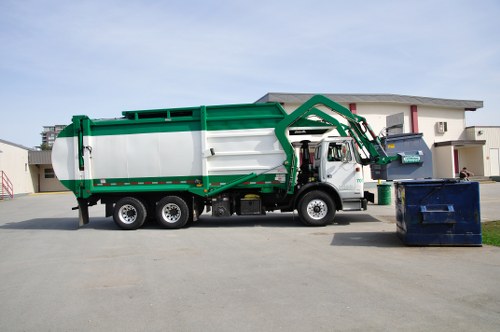 Practical reuse pathways are embedded into our operations: bulky items that are still serviceable are diverted to refurbishment partners; scrap metal and construction and demolition (C&D) inert materials are separated and processed through authorised aggregates and metal recyclers; and small electrical equipment is collected for formal WEEE recycling. These actions close material loops and support a healthier local environment.
How businesses can help: adopt clear source-separation at the point of waste generation, schedule regular collections to avoid fly-tipping, and choose a commercial waste partner that demonstrates local transfer station use, charity partnerships and a low-emission fleet. Small changes — like separating food waste and preventing contamination of dry recycling — deliver large benefits when multiplied across the Kentish Town community.
Looking ahead we continue to expand the sustainable rubbish area model across the neighbourhood, exploring smart-bin trials, incentive schemes and expanded reuse contracts. Our long-term aim is to align Kentish Town commercial waste management with the highest standards for circularity and to support businesses in meeting both regulatory requirements and their own corporate sustainability aspirations.
